

Best Low-Maintenance Plants for Balconies (That Actually Survive)
If you want a beautiful balcony without spending every weekend watering, pruning, and worrying about unhappy plants, choosing the right varieties makes all the difference. The best low-maintenance plants for balconies are tough, adaptable, and capable of handling containers, changing temperatures, wind, and occasional missed waterings. Whether your balcony gets blazing afternoon sun or only a few hours of gentle light, these easy balcony plants can help you create a lush outdoor retreat with less effort.
The key is matching each plant to your balcony’s growing conditions. Before buying anything, consider sunlight, wind exposure, container size, drainage, and how frequently you can realistically water. From drought-tolerant succulents and aromatic herbs to resilient tropical-looking foliage, these easy-care balcony plants can add color, texture, privacy, and personality. Best of all, many work beautifully in small spaces, making them ideal for apartment balconies and compact urban homes.
1. Snake Plant

Snake plants are among the easiest balcony plants for beginners because they tolerate neglect remarkably well. Their upright leaves bring architectural shape to small outdoor spaces without requiring constant attention. They prefer bright indirect light but can tolerate lower-light conditions, making them particularly useful for balconies that do not receive strong sunlight all day. Their vertical growth also means they take up relatively little floor space compared with spreading plants.
For the healthiest results, use a container with excellent drainage and allow the soil to dry between waterings. Avoid keeping the roots constantly wet, especially during cooler weather. A collection of snake plants in different pot sizes can create an attractive layered display beside a balcony door, seating area, or privacy screen. Their sculptural appearance also complements modern, minimalist, boho, and contemporary balcony decor.
2. Aloe Vera

Aloe vera is a fantastic choice if your balcony receives plenty of sunshine and you want a plant that does not demand daily care. Its thick, fleshy leaves store water, allowing the plant to handle occasional dry periods better than many delicate container plants. Aloe also brings a fresh, architectural look to balconies, especially when planted in simple terracotta pots that emphasize its natural shape and Mediterranean character.
Place aloe vera in a container with drainage holes and use a gritty, well-draining potting mix. Water thoroughly but infrequently, allowing the soil to dry before watering again. During rainy periods, protect the pot from excessive moisture whenever possible. Grouping several aloe plants at different heights can create a stylish low-maintenance balcony garden that feels lush while requiring very little routine maintenance.
3. Pothos
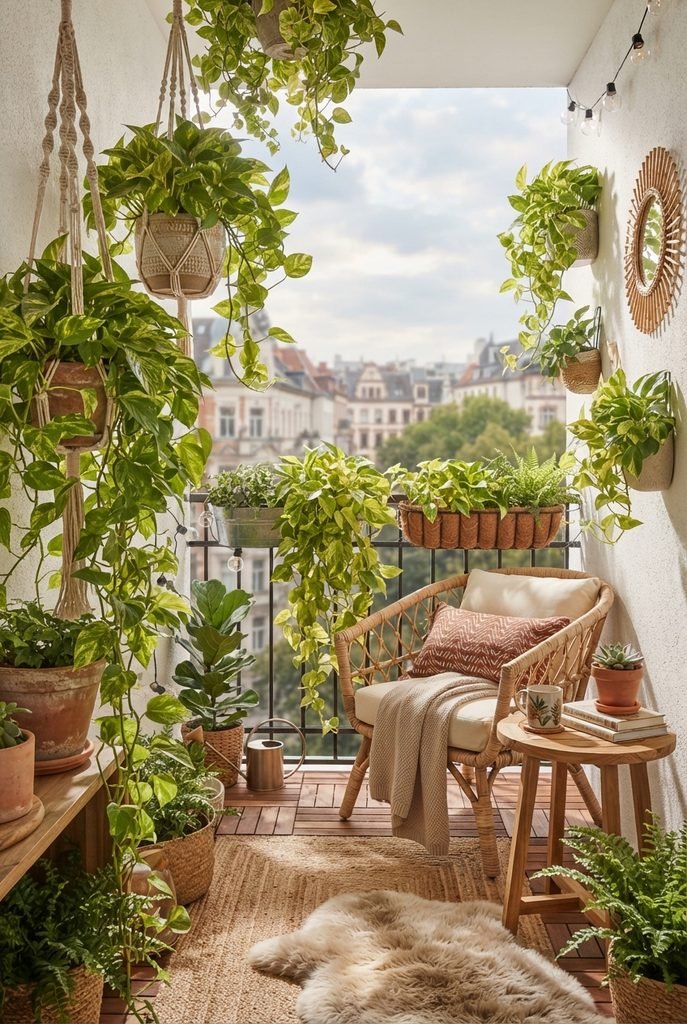
Pothos is a favorite for anyone who wants abundant greenery without complicated plant care. Its trailing vines can soften hard balcony railings, empty walls, shelves, and hanging baskets while creating a fuller, greener appearance. Depending on the variety, pothos can feature green, golden, or variegated leaves, giving you plenty of ways to coordinate your balcony plants with your outdoor furniture and decor.
Pothos prefers bright, indirect light but can adapt to lower-light conditions. Water when the upper portion of the soil feels dry, and avoid leaving the roots sitting in water. On balconies, consider hanging pothos where strong wind will not constantly whip the vines around. With occasional trimming, you can encourage fuller growth and maintain an attractive shape throughout the growing season.
4. Spider Plant

Spider plants are excellent low-maintenance balcony plants because they grow quickly, tolerate occasional neglect, and produce attractive arching foliage. Their striped green-and-white leaves add brightness to small outdoor spaces, while mature plants can produce baby plantlets that cascade from the mother plant. This makes them especially attractive in hanging baskets where their naturally flowing shape becomes part of the balcony decor.
Give spider plants bright filtered light and use containers with good drainage. Water when the soil begins to dry, but avoid keeping the roots constantly saturated. They work particularly well in hanging planters, railing boxes, and elevated stands where their leaves can spill downward. Combine several spider plants with simple neutral pots for an affordable balcony makeover that looks fresh, relaxed, and effortlessly green.
5. Jade Plant

Jade plants are wonderfully suited to sunny balconies because their thick leaves store moisture and help them tolerate periods of dryness. Their compact, tree-like form can make a balcony feel more established without requiring a huge amount of space. Jade also works beautifully as a decorative focal point, particularly when placed in an attractive ceramic or terracotta planter that complements the surrounding outdoor furniture.
The most important care rule is avoiding overwatering. Let the potting mix dry substantially between waterings and always use a container with drainage. Jade plants enjoy plenty of light, so a bright balcony can be ideal. During periods of intense weather, monitor the plant for signs of stress and adjust its position if necessary. With simple care, a jade plant can become a long-lasting feature in your balcony garden.
6. Lavender
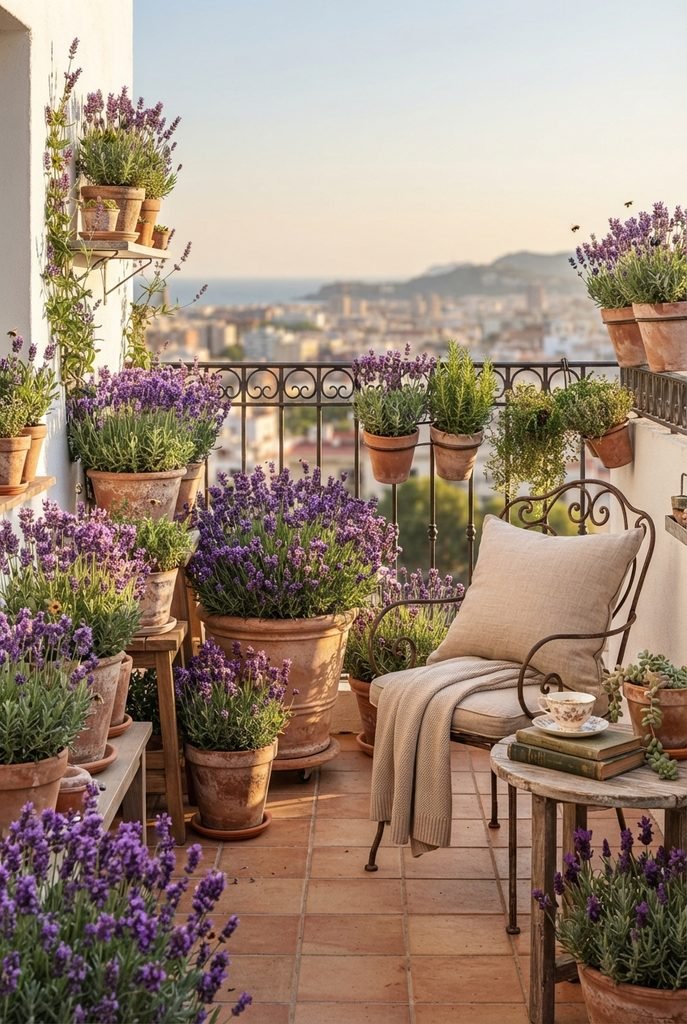
Lavender is a beautiful option for sunny balconies where you want flowers, fragrance, and relatively simple maintenance. Its silvery-green foliage and purple blooms instantly create a relaxed Mediterranean feeling, making even a small apartment balcony feel like a peaceful garden retreat. Lavender also adds vertical interest when several containers are grouped together around a chair, railing, or small outdoor table.
Choose a sunny position and a container with excellent drainage because lavender dislikes constantly wet soil. Allow the growing medium to dry between waterings and avoid heavy, water-retaining soil. Light pruning after flowering can help maintain a neat shape. Pair lavender with terracotta pots, natural wood, linen textiles, and warm neutral accessories for a Pinterest-friendly Mediterranean balcony garden that feels stylish without being difficult to maintain.
7. ZZ Plant
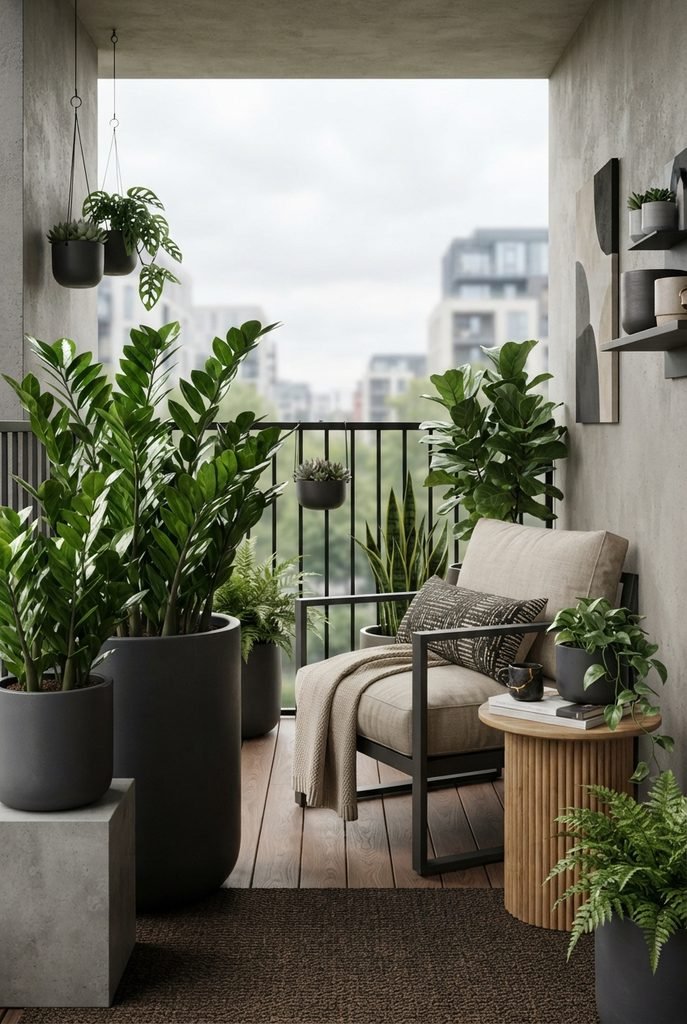
The ZZ plant is famous for surviving conditions that would challenge many other houseplants. Its thick stems and underground storage structures help it tolerate periods of dryness, making it a practical option for people who occasionally forget to water. Its glossy foliage also creates a polished, sophisticated look that works particularly well with modern apartment balconies and minimalist outdoor furniture.
ZZ plants generally prefer bright indirect light but can tolerate lower-light environments. On a balcony, choose a sheltered position rather than exposing the plant to harsh wind or extreme weather. Water only when the soil has dried considerably, and make sure excess water can escape. Place one large ZZ plant beside a balcony chair or doorway to create a simple statement without turning plant care into a daily responsibility.
8. Rosemary

Rosemary is one of the best choices for anyone who wants an attractive balcony plant that is also useful in the kitchen. Its narrow evergreen foliage provides texture throughout the year, while its aromatic leaves can be harvested for cooking. Rosemary naturally suits sunny, dry conditions, making it particularly valuable for balconies where frequent watering is inconvenient.
Grow rosemary in a pot with excellent drainage and place it where it receives plenty of sunlight. Let the soil dry between waterings rather than keeping it constantly moist. Regularly trimming a few stems for cooking can also help keep the plant compact and attractive. Combine rosemary with thyme, lavender, or other Mediterranean herbs to create a practical low-maintenance balcony herb garden with plenty of visual appeal.
9. Geraniums
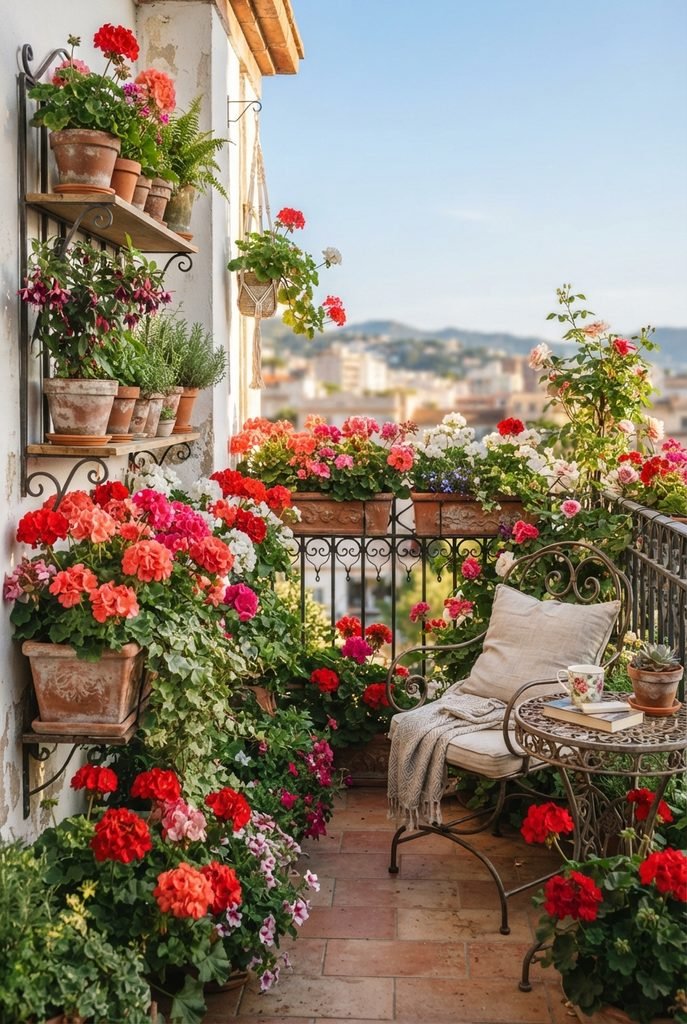
Geraniums are a classic choice when you want reliable color without choosing extremely demanding flowering plants. Their vibrant blooms can transform a plain balcony into a cheerful outdoor retreat, while their compact growth works well in containers and railing planters. Depending on your preferred style, you can choose bold flowers for a colorful maximalist look or softer shades for a romantic, cottage-inspired balcony.
Geraniums generally perform best with plenty of light and well-draining soil. Water when the surface begins to dry and remove faded flowers to encourage continued blooming. Avoid leaving containers waterlogged, particularly after heavy rain. A row of matching geranium-filled pots along a railing can create an instant visual upgrade and is one of the easiest ways to add color to a small balcony garden.
10. Ornamental Grasses

Ornamental grasses are ideal for balconies when you want movement, texture, and a more natural garden appearance. Their long blades can soften concrete, metal railings, and modern architecture while adding height without requiring complicated styling. Many varieties also look beautiful when planted in tall containers, making them useful for creating visual separation or a sense of privacy on exposed balconies.
Choose a grass suited to your local climate and balcony conditions, and use a container with reliable drainage. Watering needs vary by variety, but many established ornamental grasses are relatively resilient once settled. Group containers at different heights to create a layered effect, or place taller grasses near the balcony edge for additional privacy. Their relaxed appearance works especially well with contemporary, coastal, Scandinavian, and natural balcony styles.
How to Choose the Best Low-Maintenance Plants for Your Balcony
The best balcony plants are not necessarily the plants that require the least care overall. They are the plants that naturally match your balcony’s conditions. A sunny south- or west-facing balcony may be perfect for aloe vera, jade, rosemary, lavender, and other drought-tolerant choices. A shadier balcony may be better suited to pothos, spider plants, or ZZ plants.
Container choice matters just as much as plant selection. Always look for drainage holes and avoid choosing a pot that is dramatically larger than the plant’s root system. Use a suitable potting mix, monitor moisture levels, and protect vulnerable plants from extreme wind or temperature changes. Once your plants are established, a simple routine of watering, occasional trimming, and removing damaged leaves can keep your balcony looking beautiful.
Low-Maintenance Balcony Plant Styling Ideas
For a polished Pinterest-worthy balcony, avoid placing every plant at the same height. Instead, combine floor planters, railing boxes, hanging baskets, plant stands, and small tabletop pots. This creates visual layers and makes a compact balcony feel much fuller without overcrowding the walking area.
You can also coordinate your planters with your existing decor. Terracotta pots create a Mediterranean or rustic feeling, woven baskets work beautifully with boho spaces, while simple ceramic planters complement modern and Scandinavian balconies. Add a small outdoor rug, compact chair, lantern, or wooden stool to make your plants feel like part of a complete outdoor room rather than a collection of individual pots.
Frequently Asked Questions
What are the best low-maintenance plants for a balcony?
Some excellent options include snake plants, aloe vera, pothos, spider plants, jade plants, lavender, ZZ plants, rosemary, geraniums, and ornamental grasses. The best choice depends on how much sunlight, wind, and moisture your balcony receives.
Which balcony plants can survive missed watering?
Succulents such as aloe vera and jade plants are particularly tolerant of dry conditions. Snake plants and ZZ plants can also handle occasional missed watering because they store moisture and generally prefer their soil to dry between waterings.
What plants are best for a sunny balcony?
For bright, sunny balconies, consider lavender, rosemary, aloe vera, jade plants, and many geranium varieties. These plants generally appreciate strong light, although individual varieties may have different temperature and watering requirements.
What plants are best for a shady balcony?
Pothos, spider plants, and ZZ plants are useful choices for balconies that receive less direct sunlight. However, even shade-tolerant plants usually benefit from some indirect natural light.
How do I keep balcony plants alive when I travel?
Choose plants that tolerate dry periods, use containers with good drainage, and thoroughly water plants before leaving if appropriate for their species. For longer trips, a simple self-watering system or trusted person checking the plants can help.
What are the easiest plants for beginner gardeners?
Snake plants, ZZ plants, pothos, aloe vera, and spider plants are particularly beginner-friendly because they can tolerate some neglect when their basic light, watering, and drainage needs are met.
Final Thoughts
A beautiful balcony garden does not have to become another daily chore. By choosing resilient plants that match your sunlight, weather, container space, and watering habits, you can create an outdoor space that stays attractive with surprisingly little effort. The secret is choosing the right plant for the right balcony, rather than trying to force a plant into conditions it does not enjoy.
Whether you prefer a lush boho balcony, a minimalist urban retreat, a Mediterranean-inspired herb garden, or a colorful floral space, there are plenty of low-maintenance balcony plants that can help you get the look. Start with two or three easy-care varieties, add attractive containers, and build your balcony garden gradually.